Is this mold?
Three questions. One answer: eat, fix or bin.
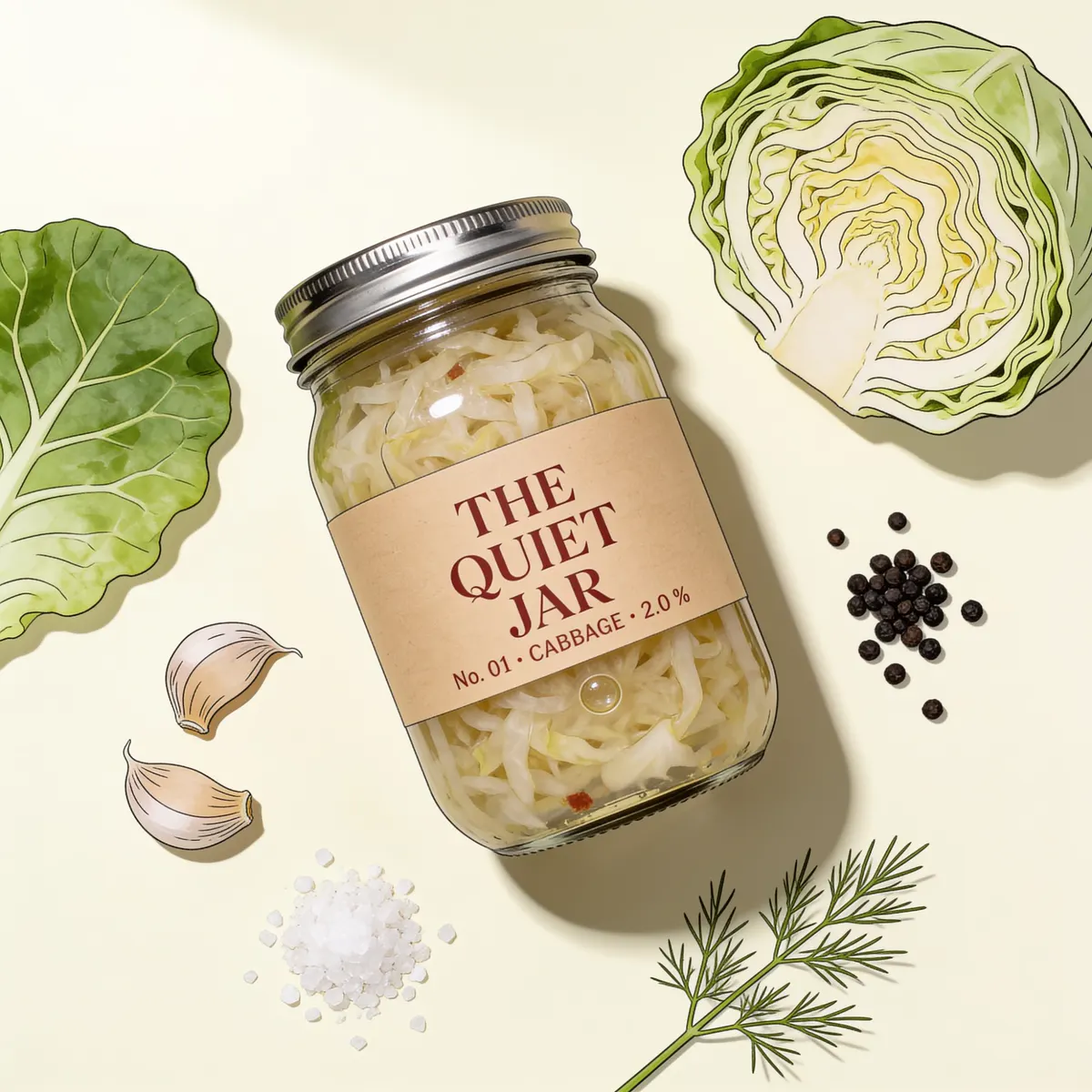
Anything fuzzy, raised or coloured on top?
Look from the side, in daylight.
Open it. Does it smell sour?
Tangy, sharp, a little sulphur from cabbage. All normal.
Is everything under the brine?
Mold can only start where air touches food.
That's fermentation.
A flat white film is kahm yeast. Skim it off. Cloudy brine and bubbles are normal. Taste it; fridge when it's sour enough for you.
Acid is what keeps it safe: at pH 4.6 or below, botulism bacteria can't grow.1

Keep this answer on your fridge.
Printable "Is this safe?" page + salt chart, then 4 short emails. Unsubscribe anytime. PrivacyPush it under. Check tomorrow.
Press everything below the brine with a clean spoon. Low on liquid? Top up with brine: about 25 g salt per litre of water.2 Weigh it down with a leaf or a small bag of brine.
Mold needs air. The brine keeps air out.
Never guess the salt again.
Printable salt chart + "Is this safe?" page, then 4 short emails. Unsubscribe anytime. PrivacyThat's mold. Bin the whole jar.
In soft, wet food, mold spreads below what you can see. Don't scoop around it. Wash the jar hot. Next time, keep everything under the brine.
USDA advice for moldy soft foods: discard.3
Make the next jar work.
Printable "Is this safe?" page + salt chart, then 4 short emails. Unsubscribe anytime. PrivacyWrong microbes won. Bin it.
Sour is the only right smell. Rotten or putrid means spoilage got ahead, usually too little salt or too warm a room. Next jar: weigh the salt, find a cooler spot.
When in doubt, throw it out.3
Get the salt right next time.
Printable salt chart + "Is this safe?" page, then 4 short emails. Unsubscribe anytime. PrivacyKeys 1 / 2 to answer · Esc to start over
What normal looks like.
Packed
Pressed under its own brine. Lid loose.
An illustration rendered from two reference frames, not a recording of one jar. Around 20 °C. Cooler kitchens run slower.2
Four jars. Four weeks.
Pages from the book, as they print. Drawings, not stock photos. Tap a page to read it.
I'm Michael, and I write from a kitchen in Poland. I binned my first jars because nobody would just say: flat is fine, fuzzy isn't. This is the book I wanted at jar one.
- sponsors
- supplements
- health claims
- stock photos

Fermentation Without Fear
Four jars, four weeks, twenty recipes. One PDF for print (A5) and one for your phone.
- "Is this safe?" poster: eat, fix or bin at a glance
- One jar a week: what you'll see, what to do, day by day
- 20 one-page recipes, all weighed in grams
- Every safety rule with its source · 76 pages · free updates by email
I've never fermented. Is this for me?
Yes. Week one is cabbage and salt, the most forgiving jar there is.
What if my jar still goes wrong?
Every page says what to do next: eat, fix or bin. If the book doesn't help, reply to your receipt for a refund.
Is this medical or health advice?
No. It's food-safety practice from USDA and FDA guidance, with sources. No health claims.
- US FDA, 21 CFR 114.3: acidified foods, equilibrium pH 4.6 or below. eCFR
- National Center for Home Food Preservation (USDA-funded): sauerkraut, salt ratio, keeping food submerged, fermenting temperatures. nchfp.uga.edu
- USDA FSIS: Molds on food, are they dangerous? fsis.usda.gov